
A one-day supplier audit, run with the right checklist, predicts more about three years of ptfe lined transport storage tanks supply than three months of email negotiation â because it observes the system that will serve you, not the salesperson who is selling to you. This guide shows what to look at, in what order, and what to walk away from.
The audit one-liner is tempting â walk the floor, shake hands, form an impression â but impressions formed in one day decay in one week, while the observations behind them, if structured, hold for years. A checklist turns a visit into a measurement.
As a manufacturer based in China, æ±èæ·åæ°æææéè´£ä»»å ¬å¸ (www.jsjcxclgs.com) supplies PTFE lined transport storage tanks, PTFE lined vessels, PTFE lined pipes and related products to customers in more than forty markets. In this guide we explain what actually determines quality in this category, how to assess a factory before you commit, and how to build a supply relationship that holds up over years of repeat ordering.
Before you send a request for quotation, be precise about what you are buying. These are the questions that separate a professional sourcing decision from a hopeful one.
What is the production capacity and current lead time? A factory that cannot state monthly capacity in units cannot forecast reliably.
Which quality standards apply, and can they evidence compliance? Ask for ASTM D3294, ISO 9001 documentation rather than a verbal claim.
Is material traceability documented? Certificates of material origin prevent costly surprises.
What is the defect rate and how are returns handled? Ask for historical data, not a policy statement.
Can they customize to your market's specification? Voltage, sizing, labelling and packaging often differ by country.
What after-sales support is included? Spare parts availability and technical support determine lifetime cost.
What is the total landed cost? Freight, duty and durability matter more than FOB price.
Quality in ptfe equipment and storage tanks is the sum of four things: material selection, manufacturing precision, assembly consistency, and testing discipline. A product can look identical to a competitor and behave completely differently after six months in service if any one of these is weaker.
Material grade: the raw material must match the specification, with certificates to prove it.
Manufacturing precision: tolerances must hold across the production run, not just the sample.
Assembly consistency: repeatable processes prevent batch-to-batch variation.
Testing discipline: functional and safety testing must be routine, not exceptional.
For buyers, the practical implication is that you should evaluate capability rather than appearance. A well-equipped factory with documented processes will out-perform a low-cost workshop every time, even if the sample products look the same.
We recommend auditing five dimensions before the first paid order.
Ask for facility size, equipment list, monthly output, and the number of production lines. A factory that can describe its bottleneck process understands its own capacity. Request photos or a live video walkthrough of the production floor.
Confirm certification such as ISO 9001, CE and ask to see the internal inspection records. A genuine quality system produces documents: incoming material checks, in-process checks, and final inspection reports.
Understand where raw materials come from and how they are verified. Vertically integrated suppliers control more of the quality chain and are less exposed to sub-supplier problems.
Ask which tests are performed in-house and which are outsourced to third parties. For export markets, third-party test reports from recognised laboratories carry more weight than internal claims.
Evaluate responsiveness during the quotation stage â it is a good predictor of post-sale behaviour. Ask about spare parts availability, technical documentation, and warranty terms in writing.
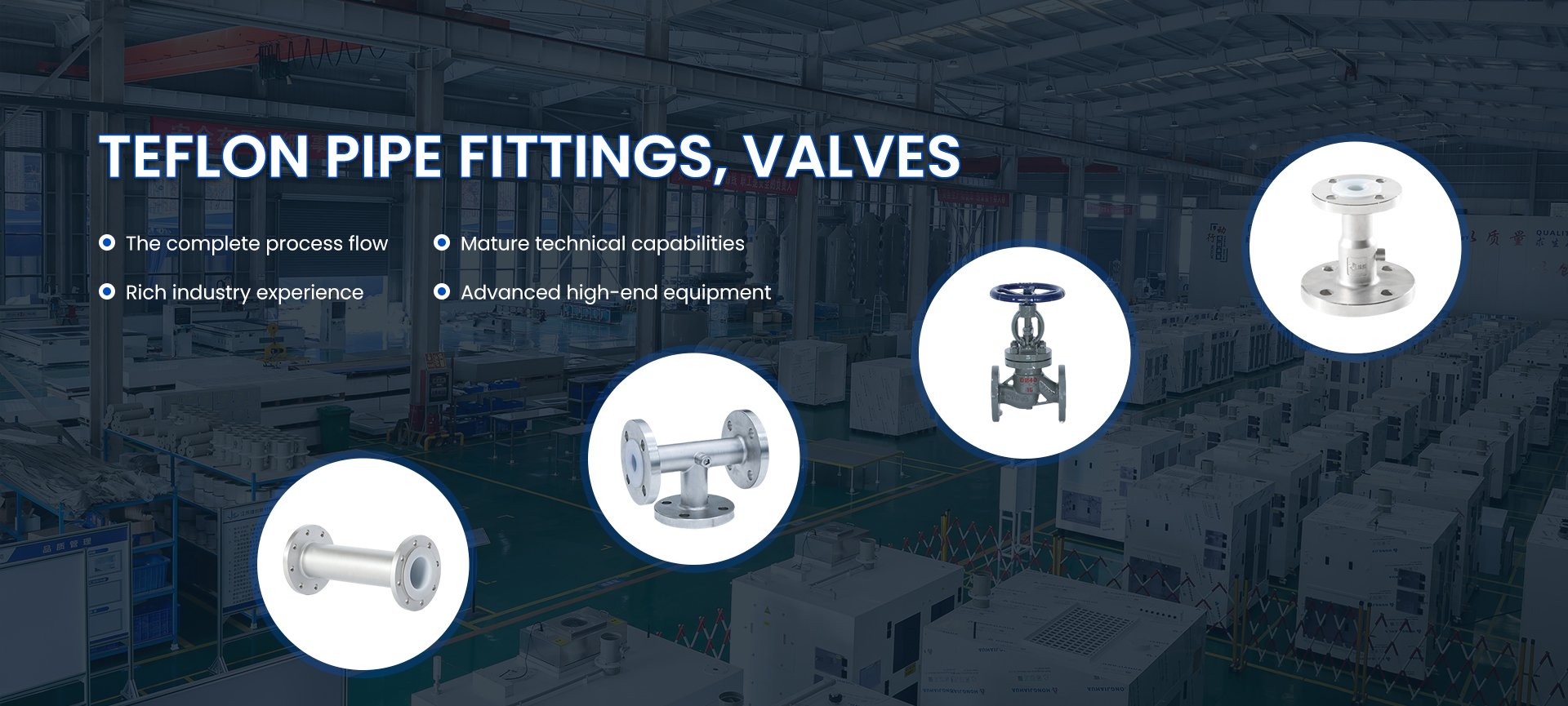
Most buyers eventually want their own branding, and the best time to discuss it is before the first order. Typical customization includes product sizing, colour, labelling, packaging, and documentation.
Product customization: dimensions, capacity, voltage and configuration tailored to your market.
Branding: logo marking, silk-screen printing, embossing or laser marking.
Packaging: neutral, retail-ready or private-label cartons with your barcode and compliance text.
Documentation: user manuals and compliance statements in your market's language.
Discuss minimum order quantities for customized runs early, because decoration and tooling often set a higher MOQ than the base product.
Unit price is only one part of the equation. The lowest quote frequently carries the highest total cost once durability, freight and returns are included.
| Cost Factor | What to Compare | Hidden Risk |
|---|---|---|
| Unit price | FOB per unit | Ignoring specification differences |
| Durability | Service life | Premature failure and warranty claims |
| Freight | Volumetric weight | Light but bulky shipments cost more |
| Duty and compliance | HS code and certification | Clearance delays |
| Returns | Defect rate | Reputational damage |
| Support | Spare parts and service | Downtime for your customer |
Build a landed-cost model and negotiate on the total. Suppliers respect buyers who understand their cost drivers because it signals a long-term relationship.
The best pricing and priority allocation go to buyers who order predictably. Share a rolling forecast, place consistent orders, and give clear feedback on quality. Factories reward reliable partners with better lead times and preferential treatment when capacity is tight.
It also helps to visit the factory when practical. A single visit reveals more about capability than months of email.

Not every supplier is the same kind of business. Understanding the model helps you choose the one that fits your needs.
| Supplier Type | Control Over Quality | Price Level | Best For | Main Risk |
|---|---|---|---|---|
| Direct factory | Highest | Competitive | Volume buyers | Higher MOQ |
| Trading company | Medium | Higher | Small or mixed orders | Less quality control |
| OEM/ODM partner | High | Competitive | Brand owners | Development time |
| Distributor | Low | Highest | Urgent small orders | Limited customization |
For most buyers building a brand or a stable catalogue, a direct factory with genuine customization capability offers the best balance of quality control, price and flexibility.
Depending on your destination market, several standards and certifications may apply to ptfe equipment and storage tanks. Confirming them early prevents costly compliance surprises.
ASTM D3294: confirm the factory can supply documentation for this standard where it applies to your market.
ISO 9001: confirm the factory can supply documentation for this standard where it applies to your market.
GB standard: confirm the factory can supply documentation for this standard where it applies to your market.
CE: confirm the factory can supply documentation for this standard where it applies to your market.
ISO 9001: request the certificate and verify its validity and scope.
CE: request the certificate and verify its validity and scope.
A structured process reduces risk far more than a clever negotiation.
Define your technical specification and target market requirements.
Shortlist three suppliers and request capability data and references.
Order paid samples and test them against your specification.
Audit the chosen factory against the five dimensions above.
Agree pricing, MOQ, packaging and lead times in writing.
Place a trial order and inspect the shipment on arrival.
Review performance with real customers before scaling.
Lock in capacity and lead times for the coming season.
A day is enough to audit a factory if the day is structured; unstructured days produce impressions, and impressions produce re-orders of whatever the guide was selling. The sequence below fits one working day and covers the system, not the showroom:
| Hour | Focus | What a Good Answer Looks Like |
|---|---|---|
| 1 | Incoming materials: where do they enter, who checks what | Graded incoming checks tied to supplier history, not blanket inspection |
| 2 | Process flow walk: follow one order from release to packing | Operators who can state what they check and what happens on failure |
| 3 | Quality lab and instruments: calibration stickers, records, methods | Current calibration certificates, logged measurements, defined methods |
| 4 | The warehouse and shipping dock: FIFO evidence, carton prep | Batch dating, lot traceability, staged export cartons with real labels |
| 5 | Management interview: scorecards, CAPA log, last complaints | A CAPA log with closed items, and complaints discussed without flinching |
| 6 | Debrief: gaps, follow-ups, evidence requests | Named owners and dates for every gap â vagueness here mirrors vagueness everywhere |
The most diagnostic hour is the fourth: warehouses cannot be dressed up the way reception can, and FIFO discipline, lot traceability and carton preparation tell you how the factory behaves when nobody is watching. Photograph what you see, and file the audit against the supplier record â the second audit in two years is where trends become visible.

MOQ depends on the product and level of customization. Standard configurations typically start lower than private-label runs, which may require tooling or dedicated production. Ask the factory for a clear MOQ schedule by SKU.
A first order typically takes three to six weeks including sampling and approval, while repeat orders are usually shorter. Peak season can extend lead times, so plan ahead.
Order paid samples from at least two production batches, test them against your specification, and require a pre-shipment inspection before release. Documented inspection is more reliable than any sample alone.
Yes. Most manufacturers of ptfe equipment and storage tanks offer customization of size, colour, branding and packaging. Discuss the MOQ implications before committing.
At minimum, expect ISO 9001, CE. The exact requirement depends on your destination market and the application.
Compare landed cost per unit of service life, not FOB price alone. Include freight, duty, defect rate and spare parts in the calculation.
A reliable manufacturer maintains a spare parts inventory and provides technical documentation and support. Confirm the terms in writing before ordering.
Begin with a trial order, measure performance honestly, and share feedback. Consistent ordering earns better pricing and priority.
Most sourcing crises are communication cadence failures wearing costumes: nobody agreed who reports what, how often, in which format, so the first real problem arrives as a surprise instead of a trend. The cadence below generalises across the ptfe equipment and storage tanks category:
| Rhythm | Content | Why It Prevents Crises |
|---|---|---|
| Weekly during production | One photo line: progress vs plan, any exceptions | Problems surface at day 3, not day 30 |
| Per shipment | Document pack + loading photos before departure | Errors correctable before the goods sail |
| Monthly | Open-order status: dates, quantities, risks | Your planning works on facts, not memory |
| Quarterly | Scorecard review call with named actions | Small grievances get aired before they compound |
| Annually | Strategy conversation: capacity, roadmap, pricing direction | Both sides plan against the same future |
The cadence costs the supplier minutes and buys both sides months of forecast calm. Agree it at kickoff, put it in the order terms, and hold your own side to it as strictly as you hold theirs â cadence failures are rarely one-sided, and the buyer who goes silent between orders has forfeited the right to complain about surprises.
Reference calls confirm satisfaction; reference visits reveal operation. If a ptfe lined transport storage tanks supplier has customers within reachable distance, a day at one of their sites answers questions no interview can:
How the goods arrive: carton condition, documentation accuracy, count accuracy on receiving â the supplier's export system is visible in the customer's warehouse.
How the product performs: ask to see the units in service, not the spares shelf; wear patterns and maintenance habits tell you what the datasheet rounds off.
How problems were handled: every long-term customer has a story; the story's shape â whether the supplier showed up, owned it, and followed through â is the single best predictor available.
What they would do differently: ask the customer what they would specify differently if they re-qualified the supplier today; the answer is usually a free specification improvement.
Whether the relationship is real: suppliers arrange friendly references; a visit you schedule yourself, at a site you choose, is harder to stage.
Offer the reference customer something in return â a copy of your findings, a lunch, or simply professional courtesy â and ask the supplier to arrange introduction but not attendance: chaperoned answers are testimonials, unchaperoned ones are evidence.

Suppliers are not uniformly good; they are specifically good, and programmes waste money by asking each supplier for what they merely can do instead of what they reliably do. Build a one-page matrix per shortlisted supplier: rows for the capabilities that matter in your ptfe equipment and storage tanks category â volume flexibility, tight tolerance work, finishing quality, custom development, export documentation, small-order willingness â and score each from direct evidence: an order they handled, an audit observation, a document pack quality. The matrix changes awards: the cheapest overall supplier may be the most expensive source of tight-tolerance work, while a mid-priced generalist wins the everyday volume. Buyers who keep matrices current also diversify intelligently â each supplier gets the volume that fits their strengths, which is a relationship argument as much as a cost one.
Buyers track landed cost precisely and working capital loosely, which is odd, because the capital tied up between payment and sale is where importing actually strains. Map the stages once per programme:
| Stage | What Is Tied Up | Typical Duration | Lever |
|---|---|---|---|
| Deposit paid | Cash out, goods not started | 3â6 weeks | Milestone evidence before release |
| Production window | Deposit at risk, no goods to sell | 4â10 weeks | Weekly progress evidence |
| In transit | Balance paid or due; goods unsellable | 3â6 weeks sea, 1â2 air | Insurance, documentation accuracy |
| Customs and delivery | Duty and tax paid ahead of sale | Days to 2 weeks | Correct classification, pre-clearance |
| Receiving to shelf | Goods sellable but not sold | Your operation's number | Demand-linked order sizing |
The map's use is arithmetic honesty: a supplier whose price is 3% lower but whose minimum order ties up two extra months of stock may be the more expensive choice once capital cost is counted. Buyers who present this map internally also defend their order sizes better, because 'we ordered less' stops being timidity and becomes a capital decision with numbers attached.
Incoterms are quoted on every quotation and understood in fragments by most people quoting them. The working summary â the one worth keeping next to the PO:
| Term | Risk Transfers to Buyer | Buyer Should Verify |
|---|---|---|
| EXW | At the factory gate | Is export clearance and trucking actually arranged? Cheapest quote, longest to-do list |
| FOB | On board the vessel at origin port | Which port exactly; who books the vessel; the loading cut-off |
| CFR / CIF | When goods are on board (risk); costs differ | Insurance adequacy under CIF â cover is often minimum by default |
| DAP | At the named destination, before import clearance | Who clears import and pays duty â usually you |
| DDP | After import clearance at destination | Rare from origin suppliers; check the duty assumptions baked into the price |
Two habits prevent most incoterms disputes: name the exact place (not just the term â 'FOB' without a port is a negotiation) and align the term with who actually controls the freight. Buyers with a preferred forwarder buy FOB and control the booking; buyers without one often do better on CIF or DAP from a supplier with competent logistics â the right answer is organisational, not doctrinal.
Products retire, and so do their parts, and programmes that never asked 'what happens at end of life' meet the question as an emergency. The plan costs one page: for each product family, record the expected production horizon as the supplier states it, the last-buy options for parts, the equivalent successor model and its differences, and the stock strategy for the tail â the final years when demand outlives production. Ask the supplier in writing about discontinuation notice periods; twelve months is a reasonable ask, and suppliers answer it more concretely when the question arrives before the last order rather than after. Buyers who plan obsolescence convert retirements into managed transitions â successor qualification run in parallel, tail stock bought at production prices â while buyers who do not meet the same event as a crisis with a premium attached.

Working backwards: goods should be loaded one to two weeks before the holiday, production needs that again depending on scale, and materials need their own lead time â for most programmes this means confirming orders by early December for pre-CNY shipment. The factories that matter most to you are also the busiest then, so capacity is reserved by order date, not by intention.
Shrink the decision loops, not the production: approve samples faster, pre-book inspection slots, pre-clear documents, and release materials deposits on evidence rather than waiting for a weekly meeting. Production itself rarely compresses much; the administrative queue around it often hides two or three reclaimable weeks.
Convert everything to the same landed basis at your warehouse door, using your own forwarder rates for the legs each quote leaves open. The conversion takes minutes with a worksheet and removes the single most common source of false comparisons â the EXW quote that looks cheapest until its missing legs are priced.
Split by risk, not by dogma: consolidate where switching cost is low and volume earns priority, split where a single failure would stop your operation. The practical compromise most programmes land on is a primary with 70â80% and a qualified secondary holding the remainder â enough to keep the secondary warm and the primary honest.
Quotation, specification revision, golden sample record, PO, approvals, inspection reports, shipping documents, and the claim or concession correspondence â the full decision trail. Keep them for the product's service life plus the warranty period plus a year; quality disputes have long memories and short file retention, and only one of those is fixable in advance.
Once a year, review the sourcing programme as a whole rather than order by order: which suppliers earned growth and which coasted; which specifications produced disputes and need rewriting; where the freight calendar was beaten and where it beat you; what the year's claims, concessions and expedites actually cost in total. The output is a one-page reset â supplier actions, specification updates, calendar changes â issued to your own team and your top suppliers alike. Programmes without the post-mortem repeat the year with different dates; programmes with it compound small corrections into visible advantage, and the afternoon it costs is the cheapest consulting the programme will ever receive.
If you are sourcing ptfe equipment and storage tanks for distribution, OEM production or a project, æ±èæ·åæ°æææéè´£ä»»å ¬å¸ (www.jsjcxclgs.com) would be glad to share our experience and provide samples. Visit www.jsjcxclgs.com to explore the catalogue, request a quotation, and discuss customization for your market.
पता: नंबर 1, जिंगपोहू सड़क, सुसु औद्योगिक क्षेत्र, सुकियान शहर, जियांग्सू प्रांत, चीन
स्यू हाओ: +86 13813955525
स्यू गांग: +86 15189058237
ईमेल: zhaojiguang@jsjcxcl.com.cn


कॉपीराइट © 2023 जियांग्सू जिचुआंग न्यू मटेरियल्स कं, लिमिटेड साइट मैप
यह वेबसाइट यह सुनिश्चित करने के लिए कुकीज़ का उपयोग करती है कि आपको हमारी वेबसाइट पर सर्वोत्तम अनुभव मिले।

 English
 Pусский
 日本語
日本語 한국어
한국어



 Whatsapp
 टेलीफ़ोन
टिप्पणी
(0)