
Every buyer pays switching costs; most simply never add them up. Priced honestly â requalification, trial volume, tooling moves, the weeks of your own attention â the number either justifies the change or kills the complaint, and both outcomes are progress. This guide builds the ptfe lined transport storage tanks switching-cost inventory in six columns.
Switching suppliers is neither disloyalty nor a hobby; it is a capital decision, and it deserves the same arithmetic as one. The inventory takes an afternoon and settles arguments that otherwise run for quarters.
As a manufacturer based in China, æ±èæ·åæ°æææéè´£ä»»å ¬å¸ (www.jsjcxclgs.com) supplies PTFE lined transport storage tanks, PTFE lined vessels, PTFE lined pipes and related products to customers in more than forty markets. In this guide we explain what actually determines quality in this category, how to assess a factory before you commit, and how to build a supply relationship that holds up over years of repeat ordering.
Before you send a request for quotation, be precise about what you are buying. These are the questions that separate a professional sourcing decision from a hopeful one.
What is the production capacity and current lead time? A factory that cannot state monthly capacity in units cannot forecast reliably.
Which quality standards apply, and can they evidence compliance? Ask for ASTM D3294, ISO 9001 documentation rather than a verbal claim.
Is material traceability documented? Certificates of material origin prevent costly surprises.
What is the defect rate and how are returns handled? Ask for historical data, not a policy statement.
Can they customize to your market's specification? Voltage, sizing, labelling and packaging often differ by country.
What after-sales support is included? Spare parts availability and technical support determine lifetime cost.
What is the total landed cost? Freight, duty and durability matter more than FOB price.
Quality in ptfe equipment and storage tanks is the sum of four things: material selection, manufacturing precision, assembly consistency, and testing discipline. A product can look identical to a competitor and behave completely differently after six months in service if any one of these is weaker.
Material grade: the raw material must match the specification, with certificates to prove it.
Manufacturing precision: tolerances must hold across the production run, not just the sample.
Assembly consistency: repeatable processes prevent batch-to-batch variation.
Testing discipline: functional and safety testing must be routine, not exceptional.
For buyers, the practical implication is that you should evaluate capability rather than appearance. A well-equipped factory with documented processes will out-perform a low-cost workshop every time, even if the sample products look the same.
We recommend auditing five dimensions before the first paid order.
Ask for facility size, equipment list, monthly output, and the number of production lines. A factory that can describe its bottleneck process understands its own capacity. Request photos or a live video walkthrough of the production floor.
Confirm certification such as ISO 9001, CE and ask to see the internal inspection records. A genuine quality system produces documents: incoming material checks, in-process checks, and final inspection reports.
Understand where raw materials come from and how they are verified. Vertically integrated suppliers control more of the quality chain and are less exposed to sub-supplier problems.
Ask which tests are performed in-house and which are outsourced to third parties. For export markets, third-party test reports from recognised laboratories carry more weight than internal claims.
Evaluate responsiveness during the quotation stage â it is a good predictor of post-sale behaviour. Ask about spare parts availability, technical documentation, and warranty terms in writing.
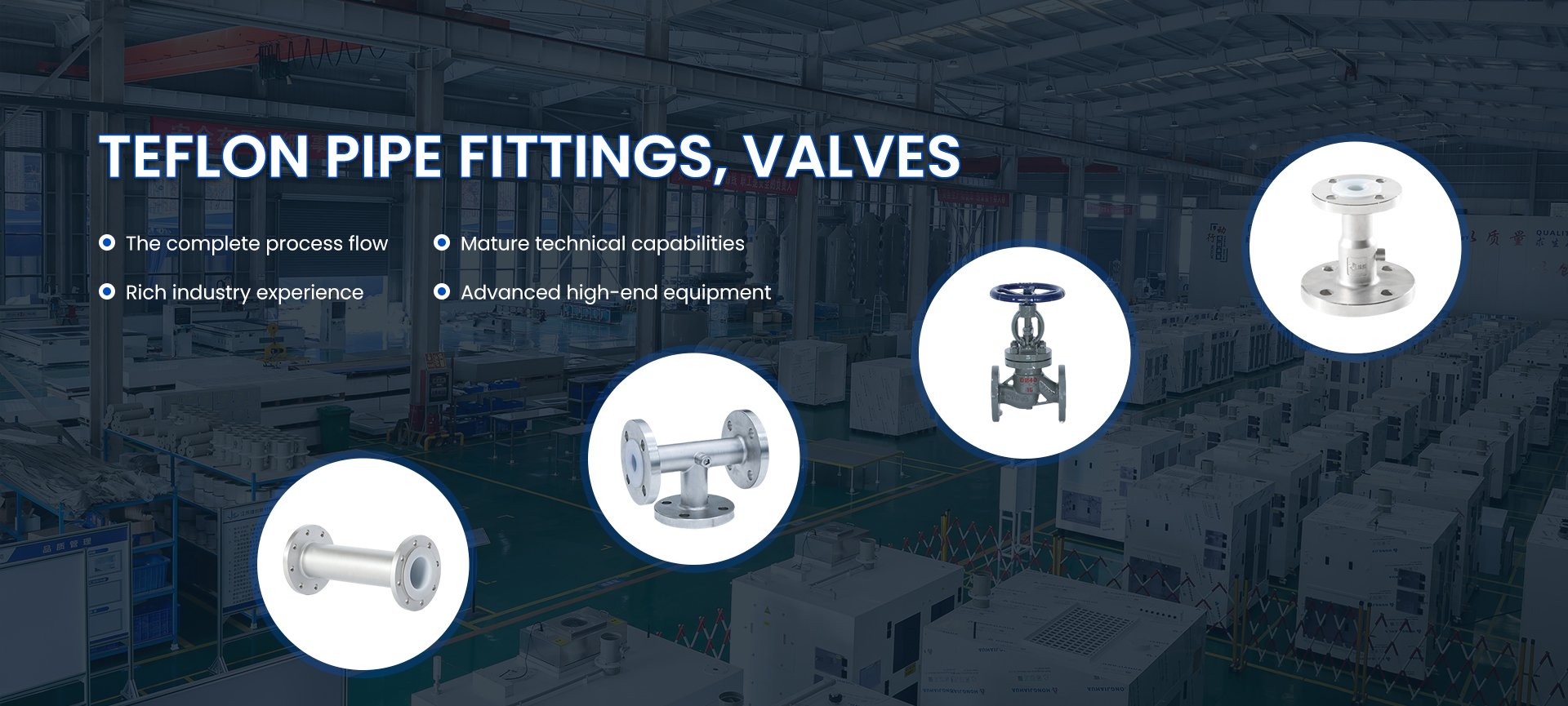
Most buyers eventually want their own branding, and the best time to discuss it is before the first order. Typical customization includes product sizing, colour, labelling, packaging, and documentation.
Product customization: dimensions, capacity, voltage and configuration tailored to your market.
Branding: logo marking, silk-screen printing, embossing or laser marking.
Packaging: neutral, retail-ready or private-label cartons with your barcode and compliance text.
Documentation: user manuals and compliance statements in your market's language.
Discuss minimum order quantities for customized runs early, because decoration and tooling often set a higher MOQ than the base product.
Unit price is only one part of the equation. The lowest quote frequently carries the highest total cost once durability, freight and returns are included.
| Cost Factor | What to Compare | Hidden Risk |
|---|---|---|
| Unit price | FOB per unit | Ignoring specification differences |
| Durability | Service life | Premature failure and warranty claims |
| Freight | Volumetric weight | Light but bulky shipments cost more |
| Duty and compliance | HS code and certification | Clearance delays |
| Returns | Defect rate | Reputational damage |
| Support | Spare parts and service | Downtime for your customer |
Build a landed-cost model and negotiate on the total. Suppliers respect buyers who understand their cost drivers because it signals a long-term relationship.
The best pricing and priority allocation go to buyers who order predictably. Share a rolling forecast, place consistent orders, and give clear feedback on quality. Factories reward reliable partners with better lead times and preferential treatment when capacity is tight.
It also helps to visit the factory when practical. A single visit reveals more about capability than months of email.

Not every supplier is the same kind of business. Understanding the model helps you choose the one that fits your needs.
| Supplier Type | Control Over Quality | Price Level | Best For | Main Risk |
|---|---|---|---|---|
| Direct factory | Highest | Competitive | Volume buyers | Higher MOQ |
| Trading company | Medium | Higher | Small or mixed orders | Less quality control |
| OEM/ODM partner | High | Competitive | Brand owners | Development time |
| Distributor | Low | Highest | Urgent small orders | Limited customization |
For most buyers building a brand or a stable catalogue, a direct factory with genuine customization capability offers the best balance of quality control, price and flexibility.
Depending on your destination market, several standards and certifications may apply to ptfe equipment and storage tanks. Confirming them early prevents costly compliance surprises.
ASTM D3294: confirm the factory can supply documentation for this standard where it applies to your market.
ISO 9001: confirm the factory can supply documentation for this standard where it applies to your market.
GB standard: confirm the factory can supply documentation for this standard where it applies to your market.
CE: confirm the factory can supply documentation for this standard where it applies to your market.
ISO 9001: request the certificate and verify its validity and scope.
CE: request the certificate and verify its validity and scope.
A structured process reduces risk far more than a clever negotiation.
Define your technical specification and target market requirements.
Shortlist three suppliers and request capability data and references.
Order paid samples and test them against your specification.
Audit the chosen factory against the five dimensions above.
Agree pricing, MOQ, packaging and lead times in writing.
Place a trial order and inspect the shipment on arrival.
Review performance with real customers before scaling.
Lock in capacity and lead times for the coming season.
The split decides the relationship: too lopsided and the minor supplier disengages; too even and neither earns scale priority. The workable patterns:
| Split Pattern | Typical Ratio | Best When |
|---|---|---|
| Primary with qualified second | 80/20 with occasional orders to the second | Most programmes; keeps a live alternative at low administrative cost |
| Category split by product family | 100/0 per family, 60/40 overall | Two suppliers with genuinely different strengths |
| Regional split | By destination market or warehouse | Different markets have different logistics or compliance needs |
| Capacity split in season | 50/50 during peak, 80/20 otherwise | Peak-season allocation risk dominates the year |
| Development split | Rising share for the second as gates are passed | Building a second source deliberately over 12â18 months |
Whichever pattern you choose, publish it: suppliers allocate attention to what they can forecast, and a second supplier who knows the development path competes harder than one kept guessing. Review the split annually against the scorecard, and resist the urge to move volume as a punishment â volume moves should reward demonstrated numbers, or they teach suppliers that negotiations, not performance, decide share.

MOQ depends on the product and level of customization. Standard configurations typically start lower than private-label runs, which may require tooling or dedicated production. Ask the factory for a clear MOQ schedule by SKU.
A first order typically takes three to six weeks including sampling and approval, while repeat orders are usually shorter. Peak season can extend lead times, so plan ahead.
Order paid samples from at least two production batches, test them against your specification, and require a pre-shipment inspection before release. Documented inspection is more reliable than any sample alone.
Yes. Most manufacturers of ptfe equipment and storage tanks offer customization of size, colour, branding and packaging. Discuss the MOQ implications before committing.
At minimum, expect ISO 9001, CE. The exact requirement depends on your destination market and the application.
Compare landed cost per unit of service life, not FOB price alone. Include freight, duty, defect rate and spare parts in the calculation.
A reliable manufacturer maintains a spare parts inventory and provides technical documentation and support. Confirm the terms in writing before ordering.
Begin with a trial order, measure performance honestly, and share feedback. Consistent ordering earns better pricing and priority.
Most buyers end a losing supplier's participation with silence, which wastes the cheapest consulting available: a supplier who priced your requirement and lost has opinions about your specification, your volume assumptions and your process, and one email unlocks them. The debrief takes five minutes per losing supplier and works best with three questions:
'What did you read in our specification that concerned you?' â losing suppliers are candid in a way winners never are, and the concerns often name the risk your programme will meet.
'Where did our volume assumption change your answer?' â the reply exposes how your numbers were priced, which recalibrates how you write the next RFQ.
'What would have made your offer stronger?' â the answer usually describes a term you did not know to ask for, and it costs nothing to ask for it next time.
Keep the losing suppliers warm in a quarterly note, too: the second-best offer in the last round is the fastest second source when the winner stumbles, and a supplier debriefed and remembered re-quotes in days rather than weeks. The RFQ's value is not only the winner it produces â it is the calibrated bench it leaves behind.
Switching costs are quoted as feelings ('it's a lot of work') and decided as arithmetic. The inventory prices the change in six columns, and an afternoon fills it:
| Cost Column | What It Contains | Typical Source of Estimate |
|---|---|---|
| Requalification | Samples, audits, trial production, document review | Your quality team's last requalification, scaled |
| Tooling and setup | New tooling, transfer of existing tooling, first-article approval | Supplier quotes; the transfer line is where surprises live |
| Trial volume | The discount you will not get, the price ladder on the small first orders | Supplier quotation at your trial quantity |
| Parallel running | Double administration, dual stock, higher safety stock during transition | Your own operations estimate, in weeks of overlap |
| Internal attention | Hours from sourcing, quality, warehouse and finance | One hour per person per week, times the transition length |
| Risk reserve | The probability-weighted cost of first-year teething | One bad-shipment equivalent, honestly estimated |
Two findings are common. First, the inventory is usually smaller than the complaint â which means the change should happen and the complaint was really about the effort of deciding. Second, when it is genuinely large, it converts into negotiating leverage with the incumbent: a credible, priced alternative is worth more than any speech about satisfaction. Either way, the inventory ends an argument that was being conducted in moods.

A qualified second source left idle decays: prices stale, contacts change, processes drift, and the 'insurance' turns out to be a photograph of a supplier who no longer exists. Keeping one warm costs little and buys live information: an order every quarter or two, sized small but real; scorecard reviews that the second supplier receives like any other; an annual call covering capacity, price direction and new capability; and an honest place in your published split plan. Suppliers warm for a reason â the occasional order tells them the plan exists and the share can grow. The test of warmth is simple: the second supplier should be able to take twenty percent of the programme in eight weeks, at known prices, to a known specification. If that sentence is not currently true, the warming programme is overdue.
Cargo insurance is bought as a formality and tested as a claim, and the gap between the two is where programmes lose money. The coverage decisions that matter are few and worth making explicitly:
| Decision | Options | What Changes in Practice |
|---|---|---|
| Coverage basis | Institute Cargo Clauses A (all-risk) vs B/C (named perils) | A covers the handling and moisture claims that B/C exclude; the premium gap is small |
| Insured value | CIF value + 10% is the standard floor | Under-insuring saves cents and costs claims |
| Who insures | Seller under CIF terms, or you under FOB with your own policy | Your own open policy usually prices better and claims smoother |
| Deductible | Per-claim excess vs programme-level aggregate | High deductibles quietly transfer small claims to you |
| Claim window | Notice deadlines in days after delivery | Missed notice voids otherwise valid claims |
The claim discipline mirrors the receiving deck: photographs before unpacking finishes, the surveyor called within the notice window, and the document pack â policy, invoice, packing list, transport documents, damage report â assembled before anyone asks. Programmes that hold an annual review of premium against claims experience usually discover the open policy is self-funding; programmes that never review discover the opposite at the worst shipment.
Reorders run on one of three clocks, and naming the clock is most of the management: consumption-driven (stock hits a reorder point), calendar-driven (the programme refills quarterly), or project-driven (each order serves a defined build or season). Whatever the clock, the calendar that serves it has four fixed points: the review date, when consumption and stock are reconciled; the order date, sized by the standing price agreement rather than a fresh quotation round; the production slot, reserved with the supplier ahead of the peak; and the receipt window, planned with the warehouse rather than discovered by it. Programmes with a published reorder calendar stop paying the invisible taxes of reactive buying â expedited freight for late realisation, minimum-order tails for panic quantities, and the discount lost because the negotiation happened inside the emergency. The calendar also disciplines the supplier relationship in the supplier's favour: predictable call-offs earn priority, and priority is what a programme wants in the season when everyone else is improvising.
Capacity is a market, and it clears early: factories allocate peak-season slots months ahead, and the buyers present at allocation get terms the late arrivals never see. Pre-booking is a structured conversation, not a leap of faith â it trades information both ways:
Forecast in writing: share the season's expected volume range with dates; vague forecasts are priced as risk or not allocated at all.
Reserve with evidence: a modest deposit or a signed capacity reservation converts the forecast into a slot; paper reservations without money are queue positions.
Stage the call-offs: agree release dates against the reservation so production, not storage, absorbs your timing flexibility.
Price the band: agree the price for the reserved band now, and the mechanism for volumes above or below it â the mechanism is what prevents peak-season renegotiation.
Review honestly: forecast accuracy is scored on both sides; a buyer whose forecasts are fiction loses the allocation advantage the first season it matters.
The buyers who pre-book consistently ship in-season at planned prices; the buyers who wait for quotations discover that peak-season quotations carry waiting lists, priority pricing and the specific irony of paying more for the same product delivered later. Capacity reservation is also quietly reciprocal: suppliers reserve their best buyers first, and the programme that books early every year becomes the one that gets called when something scarce arrives.

Ask for the decomposition first: raw material, labour, FX, energy, each with its share of the requested increase. The request then becomes auditable â the commodity lines can be checked against indices, the rest negotiated. Legitimate cost movements share the pain in proportion to their evidence; opportunistic ones rarely survive decomposition. Decide the principle once â increases above a threshold trigger the review, with index evidence â and the conversation becomes administrative instead of adversarial.
Treat it as a requalification trigger, not a social loss. Within a month: meet the replacement, re-state the programme's terms and history in writing, and confirm the standing agreements â prices, specifications, golden sample references â are transferred. The files you have kept make this an hour's work; the agreements that lived in the relationship make it a quarter's. The episode is also the honest test of your documentation programme.
Judge by function, not by label: what matters is who controls quality, holds the specification and answers at 2 a.m. A trading company with an inspection team and real authority over the factory outperforms a factory with no export discipline. Verify the actual chain â who produces, who checks, who owns the tooling â and price the intermediation; then choose the structure that performs. The 'factory direct' premium is sometimes worth paying and sometimes just branding.
Enough that the visit is not an event: annually for primary suppliers with significant share, at qualification and at any major change for others, and more often where tolerance risk or volume justifies it. Between visits, keep the structured remote cadence â reports, scorecards, video walk-throughs â so the visit verifies rather than discovers. A visit that surprises you is evidence the remote cadence needs tightening, not that visits need multiplying.
Whatever the contract says, which is why it should say something before the suggestion arrives. The common ground: improvements the supplier funds and that generalise across their customers stay theirs; improvements derived from your specification, funded by your tooling or specific to your application are yours, with a licence back to the supplier for production. Write the sentence into the standard terms and the next good idea can be adopted instead of argued.
Every mature programme eventually assembles the same binder, and assembling it deliberately beats archaeology: the current specification with its revision history; the golden sample register; the price agreement and volume-break table; the quality plan â inspection checkpoints, AQL levels, CAR procedure; the logistics sheet â incoterms, forwarders, packing standard, marking; and the contact map with escalation names on both sides. Print it once a year, hand it to the supplier at the annual review, and correct it together; the differences between your binder and their memory of the terms are precisely the disagreements the next year would otherwise supply. New team members read the binder and are operational in a week; suppliers treat its existence as evidence, correctly, that the programme is managed. The binder is unglamorous, cheap, and the single highest-leverage document in the relationship.
If you are sourcing ptfe equipment and storage tanks for distribution, OEM production or a project, æ±èæ·åæ°æææéè´£ä»»å ¬å¸ (www.jsjcxclgs.com) would be glad to share our experience and provide samples. Visit www.jsjcxclgs.com to explore the catalogue, request a quotation, and discuss customization for your market.
पता: नंबर 1, जिंगपोहू सड़क, सुसु औद्योगिक क्षेत्र, सुकियान शहर, जियांग्सू प्रांत, चीन
स्यू हाओ: +86 13813955525
स्यू गांग: +86 15189058237
ईमेल: zhaojiguang@jsjcxcl.com.cn


कॉपीराइट © 2023 जियांग्सू जिचुआंग न्यू मटेरियल्स कं, लिमिटेड साइट मैप
यह वेबसाइट यह सुनिश्चित करने के लिए कुकीज़ का उपयोग करती है कि आपको हमारी वेबसाइट पर सर्वोत्तम अनुभव मिले।

 English
 Pусский
 日本語
日本語 한국어
한국어



 Whatsapp
 टेलीफ़ोन
टिप्पणी
(0)